We deliver from Atlanta to Savannah, from Rossville to St. Marys, and everywhere in between. The price always includes delivery to your address.
Georgia covers roughly 59,400 square miles and 159 counties, and the ground changes under you four separate times between Rossville at the top of the state and the pier at St. Marys at the bottom. Metro Atlanta is dense, hilly and built on red clay that turns slick in an afternoon thunderstorm. North Georgia rises into mountain counties reached by gravel drives and switchbacks. The Fall Line runs a diagonal through Columbus, Macon and Augusta, marking where the clay of the upper state gives way to the sand of the coastal plain. South Georgia flattens into row crop country with real distance between towns. The coast is marsh, sand and tidal creek. Delivery planning here follows that geology more closely than it follows the road map, because grade, ground and approach decide what a truck can actually set down.
Distance from the nearest depot is most of what moves a delivered price, which is why we ask for a ZIP code before quoting. Give us yours, in the form below or by calling (330) 510-5817, and we will confirm the route and the timing for your exact location.
Our highest volume region in Georgia. The depot is close, so scheduling sets the date more than distance does. Typical delivery 1-2 weeks.
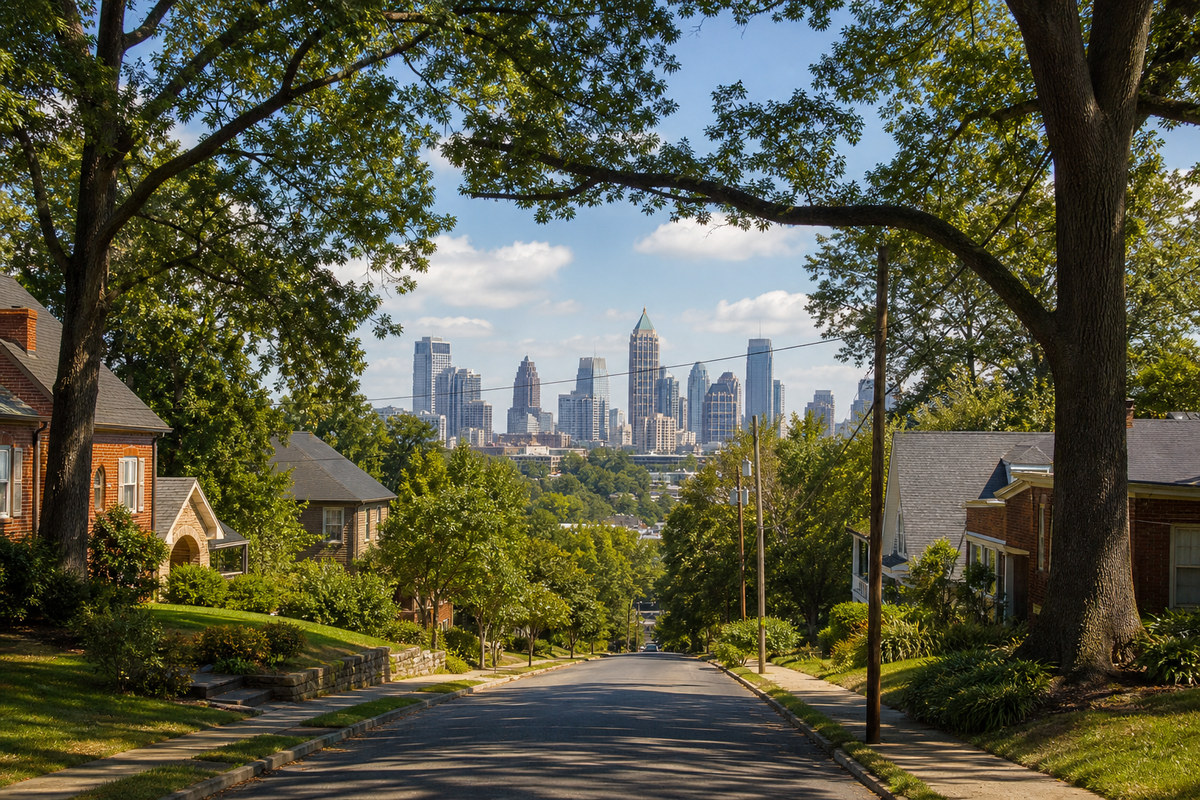
Metro Atlanta is the busiest delivery map in the state and the one with the most variables. Inside the Perimeter the constraint is almost never the container, it is the approach. A tilt bed truck needs roughly 100 feet of straight, level run to slide a 40ft box off, and closer to 70 feet for a 20ft. Older neighborhoods like Kirkwood, Grant Park, Cabbagetown and East Atlanta have narrow streets, mature oak canopy and low utility lines, and those decide the placement before we ever load. Outside the Perimeter the picture changes to sloped driveways and red Georgia clay that slicks over in an afternoon thunderstorm, so we ask about grade and drainage before scheduling. Contractors in Alpharetta, Kennesaw and McDonough use containers as lockable job site storage on active builds. Homeowners across Cobb, Gwinnett, DeKalb and Henry counties use them through renovations and moves. We schedule around the Downtown Connector and Spaghetti Junction, which usually means an early morning or mid day window rather than fighting rush hour on I-285.
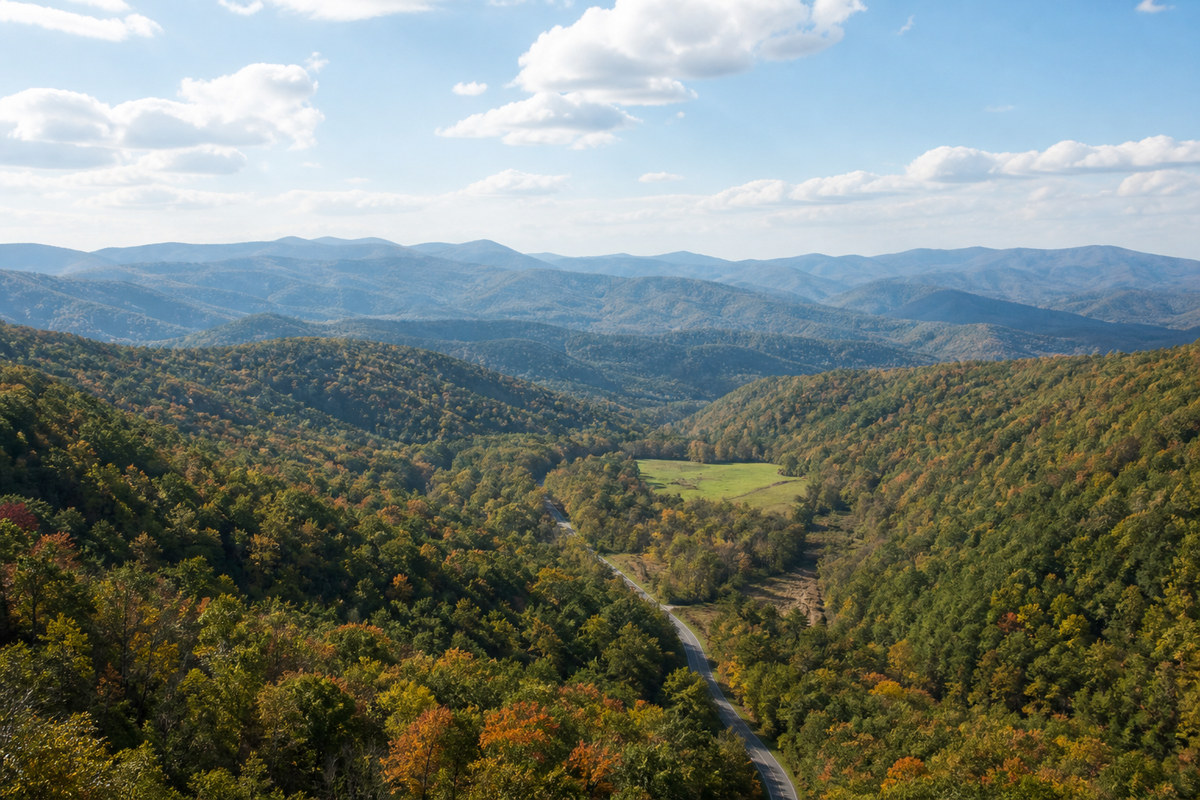
Mountain grades and gravel drives up top, the carpet and poultry corridors down in the valley. Typical delivery 1-2 weeks.
North Georgia rewards a phone call before the truck rolls. The mountain counties around Ellijay, Blue Ridge, Dahlonega and Blairsville are full of cabins and workshops reached by gravel drives with switchbacks, and a tilt bed truck cannot back a 40ft container up a grade it cannot see over. We ask for the approach angle, the width at the tightest turn, and whether there is a level run of about 100 feet at the end of it. Two 20ft containers often solve a site that will never take a 40ft. Down in the valley the work is different. Flooring plants around Dalton and Calhoun store samples, rolls and returned freight. Poultry operations across Hall, Habersham and Franklin counties keep feed, bedding and equipment dry between houses. Rome, Cedartown and Summerville sit in open ground where placement is simple. Winter matters more here than anywhere else in Georgia, because a north facing grade can hold ice after the rest of the county has thawed, so we build a day of slack into January and February schedules.
Athens, Augusta, and the farm, granite and lake country strung along I-20. Typical delivery 1-2 weeks.
The stretch from Athens to Augusta is farm country, lake country and college town all at once, and each one asks for something different. Around Athens, containers go behind contractor shops, onto rental property renovations, and into the equipment yards serving Oconee and Barrow county growth. On Lake Oconee and Lake Hartwell we are usually threading a lot with a dock at the bottom and a steep pitch in the middle, so we talk through the turnaround before we book a date. East of there, the granite yards around Elberton and the kaolin operations around Sandersville and Gordon run heavy trucks every day, which means the county roads are built for weight and placement is straightforward. Augusta and the CSRA towns of Evans, Martinez and Grovetown are steady residential and job site work, with one local wrinkle worth planning around: the golf tournament in April fills the roads and the hotels, so we schedule on either side of that week rather than through it. I-20 and the Savannah River Parkway carry nearly all of it.
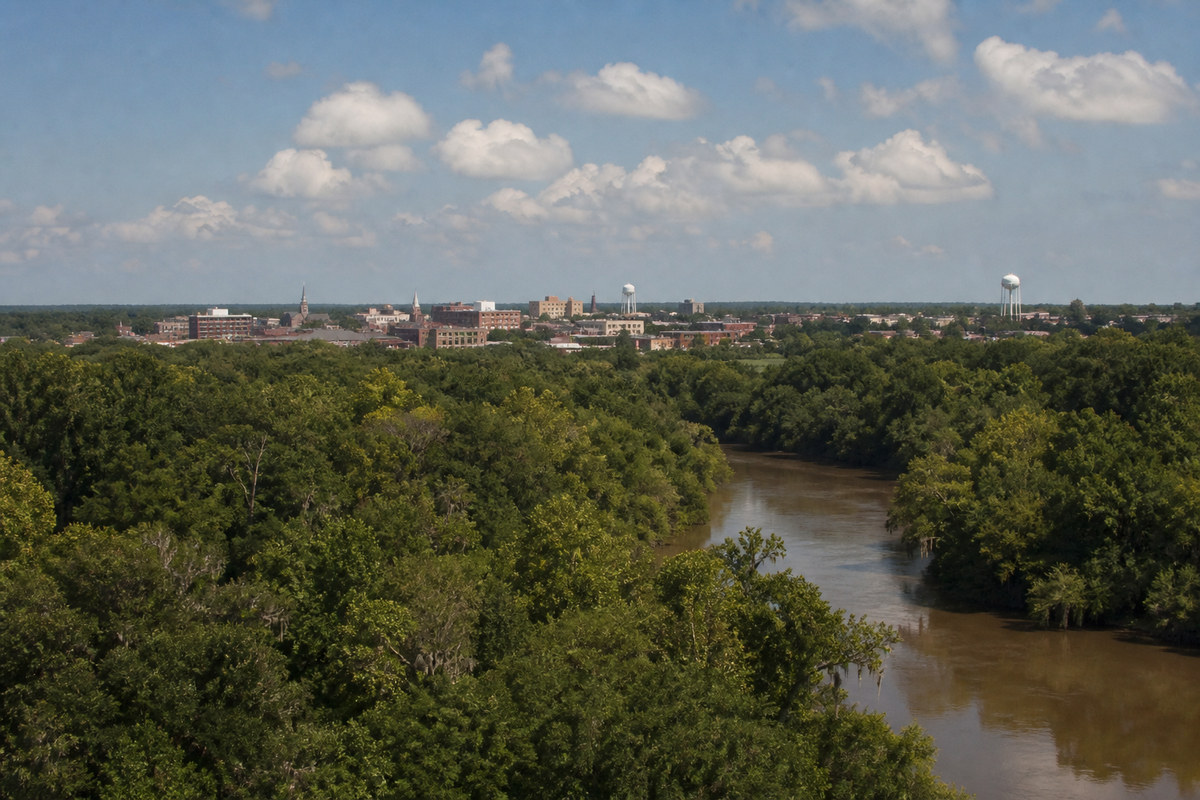
Macon to Columbus along the Fall Line, the crossroads where most of the state's freight turns. Typical delivery 1-2 weeks.
Middle Georgia is the crossroads of the state. I-75 runs north and south through Macon, Perry and Cordele, I-16 leaves for the coast, and the Fall Line Freeway ties Columbus to Macon and on toward Augusta, which makes this the easiest part of Georgia to reach on a fixed schedule. The ground tells you where you are. Sand sits over clay right along the Fall Line, heavier red clay takes over to the north, and river bottom runs south along the Ocmulgee. Contractors and defense suppliers around Warner Robins and Robins Air Force Base use containers as secure tool and parts storage. Peach and pecan operations around Fort Valley, Byron and Perry need seasonal storage that locks, and vendors who work the fairgrounds at Perry often keep a container on site year round. Over in the Chattahoochee Valley, Columbus, LaGrange and West Point carry a supplier base built around the automotive plants, and those yards order 40ft high cubes for pallet racking more often than anywhere else in Georgia.
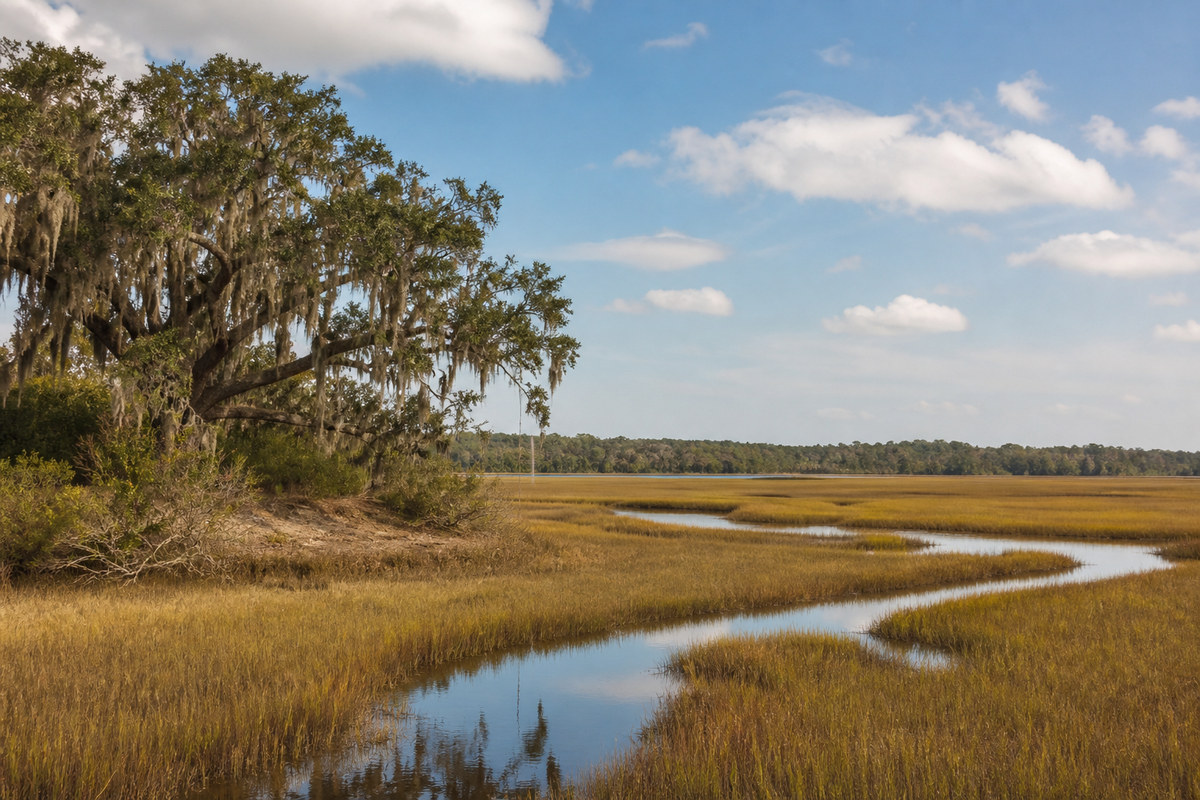
Savannah down to Brunswick and St. Marys. Close to the depot, and a different set of ground rules. Typical delivery 1-2 weeks.
The coast is our second easiest map in Georgia after metro Atlanta, because the depot sits near Savannah and the run down to Brunswick and the Golden Isles is a straight shot on I-95. What changes here is the ground and the air. Soil is sand over a high water table, so a container set straight onto turf will settle unevenly within a season. We recommend pressure treated blocks or a compacted pad at the corners, which keeps the doors swinging true for years instead of months. Salt air is the other factor. Containers that came out of ocean service already carry marine grade paint, and a yearly rinse plus touch up on any scratch goes a long way in Chatham, Glynn and Camden counties. Access questions out here are specific. The causeways to Tybee and St. Simons have their own traffic patterns, marsh front lots often have exactly one narrow approach, and tidal ditches limit where a truck can turn around. Port drayage overflow, shrimp and charter operations, Fort Stewart contractors and the growing supplier base in Bryan County all buy here.
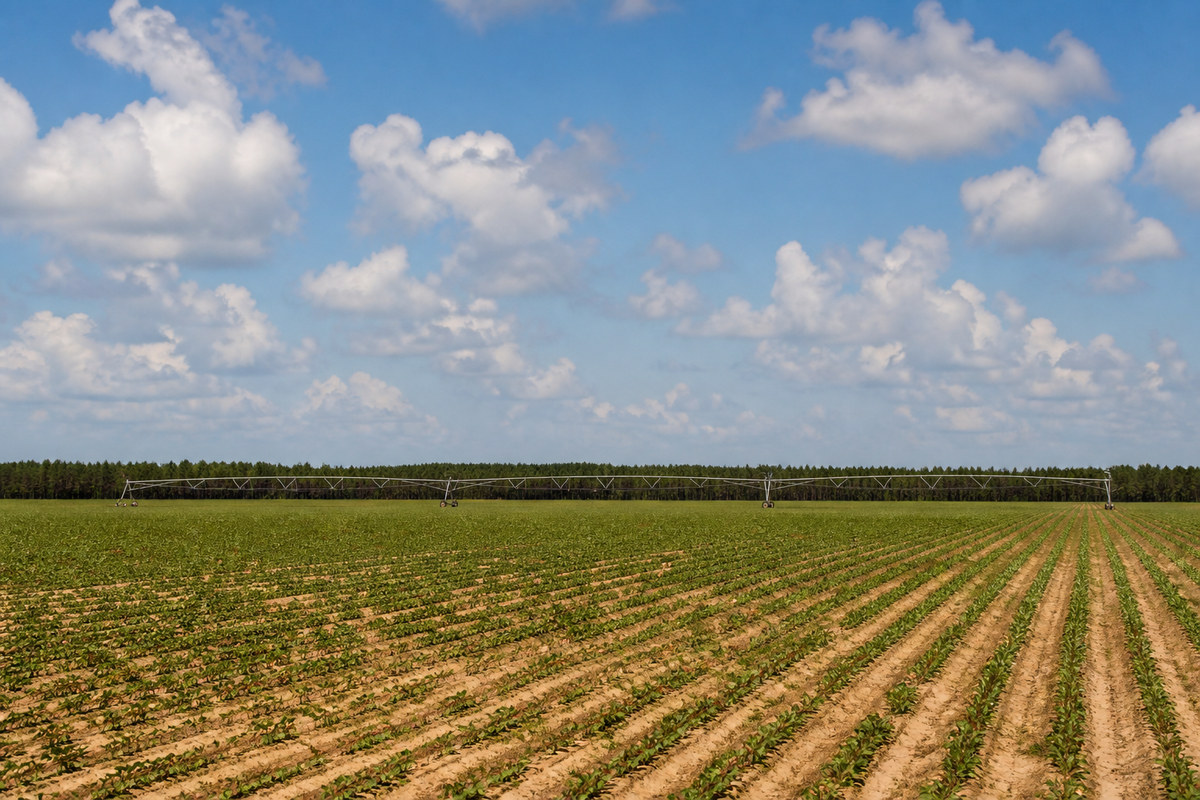
Row crop country, pecan groves and the swamp counties. Longer runs, so we set the date early and try to beat it. Typical delivery 2-3 weeks.
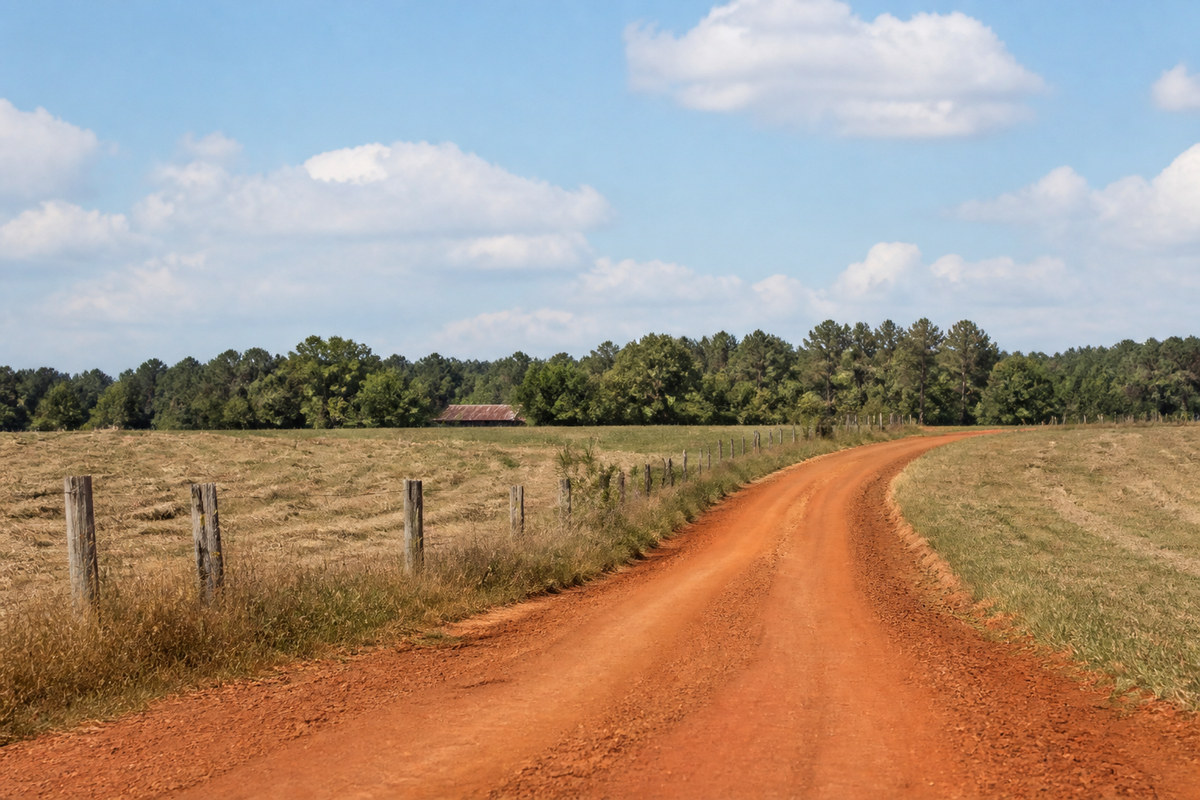
South Georgia is the longest haul on our map and the one where planning ahead pays the most. The distances between towns are real, and a run out to Bainbridge, Folkston or Quitman is a different kind of day than a run to Perry, so we quote two to three weeks and work to beat it. Land access is usually the easy part. Fields, hunting clubs, packing sheds and equipment yards have room to work, and most placements are a straight pull off a county road. The one thing to watch is deep sand. A loaded truck can bog down in a soft sand two track that a pickup crosses without noticing, so we ask whether the last quarter mile is sand, clay or gravel, and whether a tractor is nearby. Harvest timing matters too. Peanut and cotton season fills the roads and the labor pool from September into November, so growers around Tifton, Moultrie and Sylvester tend to order in summer. Pecan operations near Albany and hunting properties around Thomasville order ahead of fall for the same reason.
We deliver to properties that are not on paved roads, regularly. Tell us the access situation: how long the drive or track is, how tight the turns are, and anything the truck has to cross or pass under. Around here that usually means red clay county road, graded dirt road, washboard clay that sets up hard and slicks over after a rain, gravel drive with a soft shoulder, pine straw shoulder, field road, turn row along the edge of a planted field, logging deck, pulpwood landing, cattle gap, one lane bridge with a posted weight limit, chip-seal that goes soft in August heat, county line road, the old highway that the four lane bypassed, sugar sand two track, sand bed road through the pine flatwoods, creek bottom that stays wet a week after the rain quits, pond dam crossing, power line easement used as a back way in, kudzu covered right of way that hides the ditch line, gap and cove roads up in the mountain counties, switchback with a hairpin a truck cannot make in one pull, hunting club gate at the end of a private club road, marsh causeway, tabby and oyster shell drive, hammock road out to high ground in the marsh, dock road that turns to pluff mud at low tide, hardpan under two inches of loose sand. For most properties a standard tilt-bed handles it. Where it will not, we will say so before you order rather than after the truck arrives.
The more you tell us about the site, the more accurate the quote and the delivery estimate.
Your ZIP code and what you need. We confirm the delivery route and send a price.
Call, text or use the form. We confirm delivery to your location and send one all-in price.